Hummingbird Nectar: The Complete Guide to Feeding
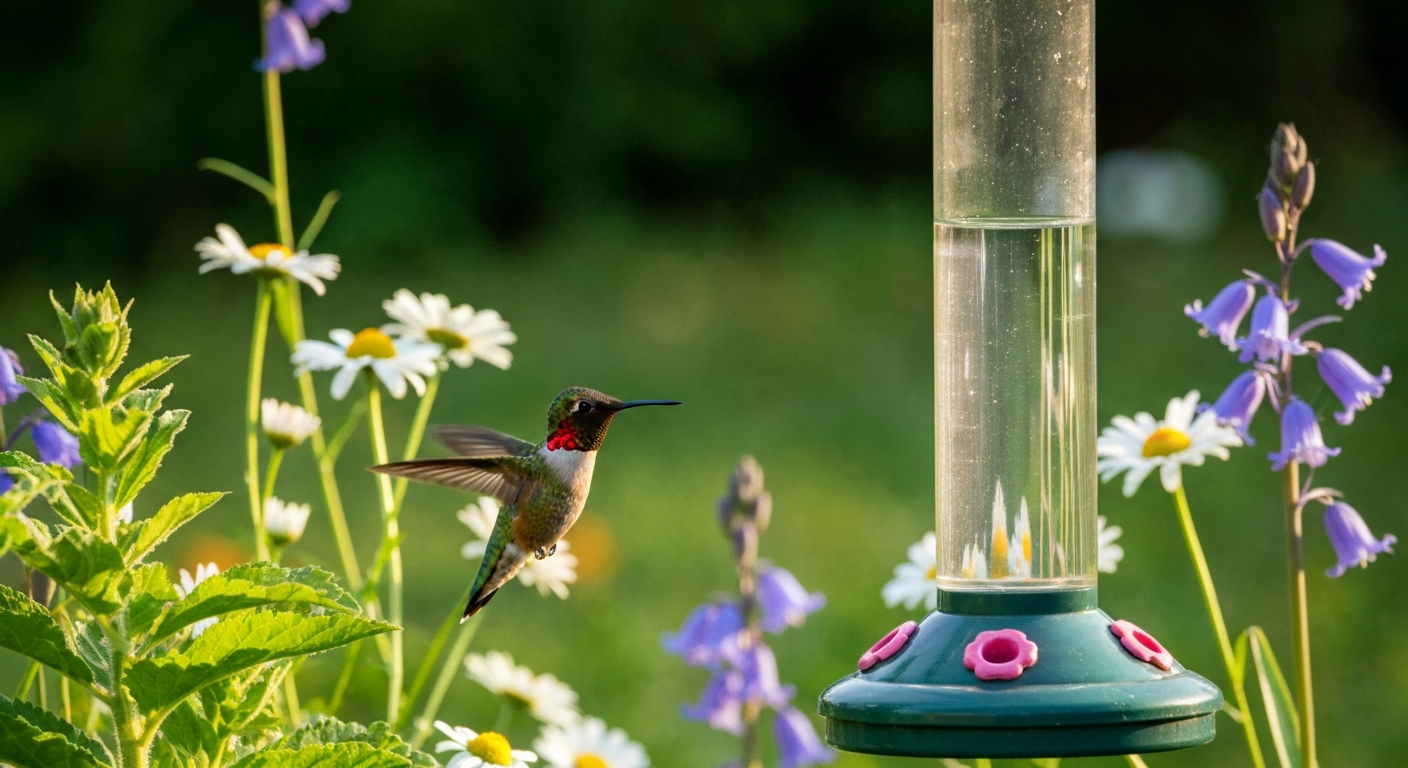
The first hummingbird feeder I ever filled was a disaster. I got the concentration wrong, forgot to clean it for weeks, and wondered why the birds avoided it. After plenty of trial and error, I’ve learned that feeding hummingbirds well isn’t complicated — but the details matter more than most people realize.
Good feeder nectar mimics what hummingbirds find in native wildflowers like bee balm, trumpet vine, and cardinal flower. Get the concentration right, keep it clean, and you’ll have hummingbirds visiting from spring through fall. Get it wrong, and you might harm the very birds you’re trying to help.
What Hummingbirds Need from Nectar
Hummingbirds burn through calories faster than any other bird. Their hearts beat over 1,200 times per minute during flight. They need quick, clean energy — and the nectar in your feeder needs to match what they’d find in the wild.
Native wildflowers produce nectar within a narrow concentration range that hummingbird metabolism is tuned to. Too concentrated and the nectar stresses their kidneys. Too dilute and they burn more energy feeding than they gain. I’ve watched hummingbirds ignore feeders with the wrong concentration while hitting the bee balm twenty feet away.
Our USDA Organic nectar mix is formulated to match that natural concentration exactly. Tear open a pouch, stir it into water, and the nectar is ready — the same clean energy hummingbirds seek from native wildflowers, with no boiling, no measuring, and no guesswork. Every pouch is certified organic, so you know exactly what’s going into the feeder and into the birds.
Why No Red Dye Ever
Commercial nectar mixes used to contain red dye #40. The theory was that red attracts hummingbirds, so red nectar must work better.
This thinking is backwards. Hummingbirds are attracted to red flowers and red feeders, not red nectar. In nature, nectar is clear or slightly amber, never bright red.
Red dye #40 has been linked to hyperactivity in children and banned in several countries. While studies on its effects on hummingbirds are limited, why risk it when clear nectar works perfectly?
I've used clear nectar for years in bright red feeders. The birds come just as readily as they did when I used the dyed stuff. The red feeder provides the visual attraction, not the nectar color.
Essential Feeder Cleaning Schedule
Dirty feeders kill hummingbirds. Bacteria and mold grow quickly in nectar, especially in warm weather.
Summer cleaning schedule (temperatures above 80°F):
- Every 2-3 days
- Daily in extreme heat
Spring/fall cleaning schedule (temperatures 60-80°F):
- Every 4-5 days
Cool weather schedule (below 60°F):
- Weekly
I use hot water and a bottle brush to scrub every surface the nectar touches. Pay special attention to the feeding ports where residue builds up. A little white vinegar helps dissolve stubborn deposits.
Never use soap or detergent. Residue can harm birds even after rinsing. If you must use something stronger than water, stick to white vinegar and rinse thoroughly.
Spotting Fermentation Warning Signs
Fermented nectar smells like wine or beer and can make hummingbirds sick or drunk. In extreme cases, it can be fatal.
Visual signs of fermentation:
- Cloudy appearance instead of crystal clear
- Bubbles rising in the nectar
- White or black floating particles
- Slimy texture
Smell test:
Fresh nectar has no odor. Fermented nectar smells yeasty, alcoholic, or sour.
I check feeders every time I walk past them. If anything looks or smells off, I dump it immediately and clean the feeder before refilling.
Fermentation happens faster in partial sun than full shade or full sun. The temperature swings speed up bacterial growth. I've learned to place feeders in morning sun with afternoon shade when possible.
Hot Weather Nectar Management
Summer heat turns feeders into science experiments. Bacteria multiply rapidly, and nectar ferments within hours in extreme conditions.
In our East Texas heat, I've had nectar go bad overnight when temperatures stayed above 90°F. During heat waves, I switch to smaller feeders and refill them daily rather than trying to maintain large feeders.
Hot weather strategies:
- Use smaller feeders for more frequent changes
- Place feeders in morning sun, afternoon shade
- Consider freezing nectar in ice cube trays for quick refills
- Check feeders twice daily during heat waves
Some people dilute their nectar in summer, thinking it helps. Don't do this. The birds need full-strength energy, especially when they're working harder to stay cool.
Cold Weather Considerations
Hummingbirds migrate through much of the country during cool weather, and some species overwinter in southern regions. Nectar management changes when temperatures drop.
Preventing freezing:
- Bring feeders in at night when temperatures approach 32°F
- Use feeder warmers in consistently cold areas
- Rotate warm and cold feeders if you have multiple
I've had Anna's hummingbirds visit feeders at 35°F on winter mornings here in East Texas. They need the energy to survive cold nights, so keeping feeders available during winter can be crucial for overwintering populations.
In consistently freezing areas, you might only put feeders out during the warmest part of the day. The birds will adapt to the schedule.
Troubleshooting Common Problems
Ants in the feeder: Use ant moats filled with water. Replace the water weekly to prevent mosquito breeding.
Bees and wasps: Check for leaks first. Bees are attracted to drips and weak seals. Yellow jacket guards work but make it harder for some hummingbird species to feed.
Nectar disappearing too quickly: You might have more visitors than you realize. Hummingbirds feed most actively at dawn and dusk. Also check for leaks.
Birds avoiding new feeders: Place them near existing food sources like flowering plants. It can take days or weeks for birds to discover new feeders.
Regional Timing Differences
Hummingbird migration timing varies dramatically across the country. Ruby-throated hummingbirds might arrive in Louisiana in February but not reach Minnesota until May.
Southern regions (Zones 8-10): Keep feeders up year-round. Some species overwinter.
Central regions (Zones 6-7): March through October typically covers migration and breeding season.
Northern regions (Zones 3-5): May through September for most areas.
Research your specific area's migration patterns. Local birding groups and extension offices often have detailed timing information.
Beyond the Feeder: Creating Complete Habitat
Feeders supplement natural nectar sources but shouldn't replace them. The best hummingbird habitat combines reliable feeders with native flowering plants.
Native plants bloom in succession, providing nectar from early spring through fall. Bee balm, cardinal flower, and trumpet creeper work well in many regions. Each USDA zone has its own standout native species.
I maintain six feeders around our property but also grow salvia, turk's cap, and flame acanthus. The birds use both resources, and the plants provide protein from insects that feeders can't offer.
Making Nectar Feeding Sustainable
Consistent nectar provision matters more than perfect timing. Birds remember reliable food sources and build them into their territorial maps.
If you're traveling during hummingbird season, ask neighbors to maintain your feeders or take them down entirely rather than leaving stale nectar. Sick birds spread disease to healthy populations.
I've found that starting with one or two feeders and maintaining them religiously works better than putting up six feeders and struggling to keep them clean.
The goal isn't to attract the most hummingbirds possible but to provide clean, reliable energy for the birds already in your area.
Consistent nectar provision matters more than perfect timing. Birds remember reliable food sources and build them into their territorial maps. The easier you make refilling for yourself, the more consistently you'll do it — and that consistency is what keeps the birds coming back.
We make an organic nectar mix if you'd rather skip the boiling — just add water.
See the mix